What are blue tickets?
It's new Japanese fine system for bicycle.
Introduction
My blog will focus on the issue of bicycle blue tickets and whether they are necessary for improving road safety. A blue ticket is a traffic citation given to cyclists who violate traffic laws, such as ignoring traffic signals, riding while using a smartphone, or cycling recklessly.
I chose this topic because bicycles are a common form of transportation, and I have noticed that many cyclists do not always follow traffic rules. These actions can put both cyclists and pedestrians at risk. These days there is an increased discussion about stricter enforcement of bicycle laws, including the use of blue tickets.

So far, I know that Japan is introducing stronger penalties for dangerous cycling behavior.
My current stance is that blue tickets are necessary because too many people continue to break bicycle laws. Therefore, without consequences, some cyclists may ignore safety rules, which could create dangers for themselves and others.
Through research and analysis over the next seven weeks, I hope to gain an understanding of bicycle safety, law enforcement, and whether blue tickets are the best way to encourage responsible cycling.
(Ken)
_________________________________________
Research Question
1. Legal and Government Sources
- What are bicycle blue tickets?
- Why were bicycle blue tickets introduced?
- What bicycle violations commonly result in blue tickets?
- What penalties are associated with bicycle blue tickets?
- How do bicycle laws differ from car traffic laws?
- What are the most common bicycle law violations?
- How do bicycle blue ticket systems differ across countries?
2. Statistical and Research Sources
- How often do cyclists break traffic laws?
- Are bicycle-related accidents increasing?
- What are the main causes of bicycle accidents?
- How many accidents involve cyclists and pedestrians?
- What age groups receive the most bicycle tickets?
- Do blue tickets reduce dangerous cycling behavior?
- Have accident rates changed since blue tickets were introduced?
- How do blue tickets affect repeat offenders?
- Are fines an effective deterrent for bicycle violations?
- Have other countries successfully reduced bicycle violations?
- What are the economic costs of bicycle accidents?
3. Public Opinion and Stakeholder Sources
- How do cyclists feel about receiving blue tickets?
- How do pedestrians view stricter bicycle enforcement?
- Do police officers believe blue tickets improve safety?
- Are blue tickets enforced fairly among all cyclists?
- Do blue tickets discourage people from cycling?
4. Policy and Evaluation Sources (NPOs)
- What are the arguments against bicycle blue tickets?
- What are the arguments supporting bicycle blue tickets?
- What alternative solutions exist besides blue tickets?
- Does education work better than punishment for improving bicycle safety?
- How effective are public awareness campaigns about bicycle laws?
- What balance should exist between education and enforcement?
- Should bicycle blue tickets continue to be used in the future?
1. Legal and Government Sources
Sources
-
National Police Agency (Japan)
-
Ministry of Land, Infrastructure, Transport and Tourism (MLIT)
- Government of the Netherlands
Q1. What are bicycle blue tickets?
Bicycle blue tickets are administrative fines issued to cyclists who violate traffic laws. Unlike criminal penalties, cyclists can pay the fine without going through a criminal trial. The system is designed to encourage safer cycling and improve road safety.
References:
Ministry of Land, Infrastructure, Transport and Tourism. (2024). Bicycle safety. https://www.mlit.go.jp
National Police Agency. (2025). Traffic safety and bicycle regulations. https://www.npa.go.jp
Q2. Why were bicycle blue tickets introduced?
The Japanese government introduced bicycle blue tickets to reduce dangerous cycling behavior and prevent serious traffic accidents. The number of accidents involving cyclists and pedestrians has raised public concern. The system also helps police respond to violations more efficiently.
References:
Ministry of Land, Infrastructure, Transport and Tourism. (2024). Bicycle safety. https://www.mlit.go.jp
National Police Agency. (2025). Traffic safety and bicycle regulations. https://www.npa.go.jp
Q3. What bicycle violations commonly result in blue tickets?
Common violations include ignoring traffic lights, riding while using a smartphone, cycling under the influence of alcohol, riding on the wrong side of the road, and riding without lights at night. These behaviors increase the risk of accidents and injuries.
References:
Ministry of Land, Infrastructure, Transport and Tourism. (2024). Bicycle safety. https://www.mlit.go.jp
National Police Agency. (2025). Traffic safety and bicycle regulations. https://www.npa.go.jp
Q4. What penalties are associated with bicycle blue tickets?
Cyclists who receive a blue ticket must pay a fine based on the type of violation. More serious or repeated offenses may still lead to criminal prosecution. The amount of the fine depends on the specific traffic violation.
References:
Ministry of Land, Infrastructure, Transport and Tourism. (2024). Bicycle safety. https://www.mlit.go.jp
National Police Agency. (2025). Traffic safety and bicycle regulations. https://www.npa.go.jp
Q5. How do bicycle laws differ from car traffic laws?
Motor vehicle drivers are required to have a driver's license and insurance, while cyclists generally are not. However, both cyclists and drivers must obey traffic signals and follow road rules. Dangerous behavior by either can result in penalties.
References:
Ministry of Land, Infrastructure, Transport and Tourism. (2024). Bicycle safety. https://www.mlit.go.jp
National Police Agency. (2025). Traffic safety and bicycle regulations. https://www.npa.go.jp
Q6. What are the most common bicycle law violations?
The most common violations include ignoring traffic signals, distracted cycling, riding on sidewalks improperly, and failing to use bicycle lights at night. These behaviors are frequently linked to traffic accidents.
References:
Ministry of Land, Infrastructure, Transport and Tourism. (2024). Bicycle safety. https://www.mlit.go.jp
National Police Agency. (2025). Traffic safety and bicycle regulations. https://www.npa.go.jp
Q7. How do bicycle blue ticket systems differ across countries?
Japan only recently introduced bicycle blue tickets, while countries such as Germany and the Netherlands have used similar administrative fine systems for many years.
References:
National Police Agency. (2025). Traffic safety and bicycle regulations. https://www.npa.go.jp
Government of the Netherlands. (2025). Number of traffic fines down half a million in 2024. https://www.government.nl/latest/news/2025/02/05/number-of-traffic-fines-down-half-a-million-in-2024?utm_
(Ken)
2. Statistical and Research Sources
Sources
-
National Police Agency (Japan) Traffic Statistics
-
OECD / International Transport Forum (ITF)
- Huemer, A. K.
- Pucher, J., & Dijkstra, L.
Q1. How often do cyclists break traffic laws?
Traffic violations by cyclists occur regularly in Japan, especially in busy urban areas. Common violations include ignoring traffic signals, riding while using a smartphone, and cycling on sidewalks where it is prohibited. These behaviors continue to be a concern for traffic safety authorities.
International Transport Forum. (2024). Road safety annual report 2024. OECD Publishing. https://www.itf-oecd.org/road-safety-annual-report-2024
National Police Agency. (2025). Traffic accidents involving bicycles (交通事故統計資料). https://www.npa.go.jp/bureau/traffic/index.html
Q2. Are bicycle-related accidents increasing?
The total number of bicycle accidents has generally decreased over the past decade. However, serious accidents caused by dangerous cycling behaviors, such as distracted riding or failing to obey traffic signals, continue to occur. Because of this, improving cyclist behavior remains an important safety goal.
International Transport Forum. (2024). Road safety annual report 2024. OECD Publishing. https://www.itf-oecd.org/road-safety-annual-report-2024
National Police Agency. (2025). Traffic accidents involving bicycles (交通事故統計資料). https://www.npa.go.jp/bureau/traffic/index.html
Q3. What are the main causes of bicycle accidents?
Many bicycle accidents are caused by failing to stop at intersections, distracted riding, speeding, and poor visibility at night. Collisions with cars, pedestrians, and other cyclists also contribute to accident rates. Following traffic rules can significantly reduce these risks.
International Transport Forum. (2024). Road safety annual report 2024. OECD Publishing. https://www.itf-oecd.org/road-safety-annual-report-2024
National Police Agency. (2025). Traffic accidents involving bicycles (交通事故統計資料). https://www.npa.go.jp/bureau/traffic/index.html
Q4. How many accidents involve cyclists and pedestrians?
Several thousand bicycle-pedestrian accidents are reported in Japan each year. Many of these accidents happen on sidewalks, where cyclists and pedestrians share limited space. Elderly people and children are especially vulnerable to serious injuries.
International Transport Forum. (2024). Road safety annual report 2024. OECD Publishing. https://www.itf-oecd.org/road-safety-annual-report-2024
National Police Agency. (2025). Traffic accidents involving bicycles (交通事故統計資料). https://www.npa.go.jp/bureau/traffic/index.html
Q5. What age groups receive the most bicycle tickets?
Q6. Do blue tickets reduce dangerous cycling behavior?
Research suggests that fines can reduce dangerous cycling behavior by encouraging cyclists to follow traffic rules. However, experts agree that education should be combined with enforcement to create long-term changes in behavior. A balanced approach is considered the most effective.
International Transport Forum. (2024). Road safety annual report 2024. OECD Publishing. https://www.itf-oecd.org/road-safety-annual-report-2024
National Police Agency. (2025). Traffic accidents involving bicycles (交通事故統計資料). https://www.npa.go.jp/bureau/traffic/index.html
Q7. Have accident rates changed since blue tickets were introduced?
It is still too early to determine whether bicycle blue tickets have significantly reduced accident rates because the system was introduced recently. Researchers will need several years of data before drawing reliable conclusions. Ongoing monitoring will help evaluate the policy's effectiveness.
International Transport Forum. (2024). Road safety annual report 2024. OECD Publishing. https://www.itf-oecd.org/road-safety-annual-report-2024
National Police Agency. (2025). Traffic accidents involving bicycles. https://www.npa.go.jp/bureau/traffic/index.html
Q8. How do blue tickets affect repeat offenders?
Repeat offenders are more likely to change their behavior after receiving financial penalties. Receiving a fine increases awareness of traffic rules and encourages greater caution while cycling. However, education may still be necessary for long-term improvement.
Huemer, A. K. (2018). Motivating and deterring factors for two common traffic-rule violations of cyclists. Transportation Research Part F: Traffic Psychology and Behaviour, 54, 223–235. https://www.sciencedirect.com/science/article/pii/S1369847816301516
International Transport Forum. (2018). Cycling safety: Summary and conclusions. OECD Publishing. https://doi.org/10.1787/7f4da6f4-en
Q9. Are fines an effective deterrent for bicycle violations?
Fines can discourage dangerous cycling by creating financial consequences for breaking traffic laws. Studies show that penalties are more effective when enforcement is consistent and cyclists clearly understand the rules. Education further strengthens the deterrent effect.
International Transport Forum. (2024). Road safety annual report 2024. OECD Publishing. https://www.itf-oecd.org/road-safety-annual-report-2024
National Police Agency. (2025). Traffic accidents involving bicycles (交通事故統計資料). https://www.npa.go.jp/bureau/traffic/index.html
Q10. Have other countries successfully reduced bicycle violations?
Yes. Countries such as the Netherlands and Germany have reduced bicycle violations by combining enforcement with cycling education and well-designed bicycle infrastructure. Their experiences suggest that multiple approaches are more effective than relying on penalties alone.
Pucher, J., & Dijkstra, L. (2003). Promoting safe walking and cycling to improve public health: Lessons from the Netherlands and Germany. American Journal of Public Health, 93(9), 1509–1516. https://pmc.ncbi.nlm.nih.gov/articles/PMC1448001/
International Transport Forum. (2013). Cycling, health and safety. OECD Publishing. https://doi.org/10.1787/9789282105955-en
Q11. What are the economic costs of bicycle accidents?
Bicycle accidents create costs for individuals and society, including medical treatment, property damage, insurance claims, lost productivity, and legal expenses. Serious accidents can also place additional pressure on healthcare systems. Preventing accidents can reduce both financial and social costs.
References:
International Transport Forum. (2024). Road safety annual report 2024. OECD Publishing. https://www.itf-oecd.org/road-safety-annual-report-2024
National Police Agency. (2025). Traffic accidents involving bicycles (交通事故統計資料). https://www.npa.go.jp/bureau/traffic/index.html
3. Public Opinion and Stakeholder Sources
Sources
Q1. How do cyclists feel about receiving blue tickets?
Q2. How do pedestrians view stricter bicycle enforcement?
Q3. Do police officers believe blue tickets improve safety?
Q4. Are blue tickets enforced fairly among all cyclists?
Q5. Do blue tickets discourage people from cycling?
4. Policy and Evaluation Sources
Q1. What are the arguments against bicycle blue tickets?
National Police Agency. (n.d.). Bicycle traffic safety education. https://www.npa.go.jp/bureau/traffic/bicycle/portal/education2.html
Japan Bicycle Promotion Association. (2025). 2024年度 自転車交通安全教育機会拡充に向けた実施状況調査研究報告書. https://www.bpaj.or.jp/?tid=102079
World Health Organization. (2023). Global status report on road safety 2023. https://www.who.int/publications/i/item/9789240086517
Q2. What are the arguments supporting bicycle blue tickets?
National Police Agency. (n.d.). Bicycle traffic safety education. https://www.npa.go.jp/bureau/traffic/bicycle/portal/education2.html
Japan Bicycle Promotion Association. (2025). 2024年度 自転車交通安全教育機会拡充に向けた実施状況調査研究報告書. https://www.bpaj.or.jp/?tid=102079
Q3. What alternative solutions exist besides blue tickets?
Many experts recommend combining blue tickets with bicycle safety education, school programs, public awareness campaigns, and improved cycling infrastructure. Building more bike lanes and providing better road designs can also improve safety. These measures help prevent accidents before they occur.
National Police Agency. (n.d.). Bicycle traffic safety education. https://www.npa.go.jp/bureau/traffic/bicycle/portal/education2.html
Japan Bicycle Promotion Association. (2025). 2024年度 自転車交通安全教育機会拡充に向けた実施状況調査研究報告書. https://www.bpaj.or.jp/?tid=102079
World Health Organization. (2023). Global status report on road safety 2023. https://www.who.int/publications/i/item/9789240086517
Q4. Does education work better than punishment for improving bicycle safety?
Education is effective because it teaches cyclists safe habits and encourages long-term behavior change. Punishment is more effective for immediately stopping dangerous behavior. Many experts recommend combining both approaches to achieve the best results.
National Police Agency. (n.d.). Bicycle traffic safety education. https://www.npa.go.jp/bureau/traffic/bicycle/portal/education2.html
Japan Bicycle Promotion Association. (2025). 2024年度 自転車交通安全教育機会拡充に向けた実施状況調査研究報告書. https://www.bpaj.or.jp/?tid=102079
World Health Organization. (2023). Global status report on road safety 2023. https://www.who.int/publications/i/item/9789240086517
Q5. How effective are public awareness campaigns about bicycle laws?
Public awareness campaigns help people understand bicycle traffic rules and safe cycling practices. Repeated campaigns through schools, television, social media, and local communities are generally more successful than one-time campaigns. They can improve knowledge and encourage safer behavior.
National Police Agency. (n.d.). Bicycle traffic safety education. https://www.npa.go.jp/bureau/traffic/bicycle/portal/education2.html
Japan Bicycle Promotion Association. (2025). 2024年度 自転車交通安全教育機会拡充に向けた実施状況調査研究報告書. https://www.bpaj.or.jp/?tid=102079
World Health Organization. (2023). Global status report on road safety 2023. https://www.who.int/publications/i/item/9789240086517
Q6. What balance should exist between education and enforcement?
Many traffic safety experts recommend using education for first-time or minor violations while applying stronger enforcement to dangerous or repeated offenses. This balanced approach encourages learning while maintaining accountability. Combining both methods is considered the most effective strategy.
National Police Agency. (n.d.). Bicycle traffic safety education. https://www.npa.go.jp/bureau/traffic/bicycle/portal/education2.html
Japan Bicycle Promotion Association. (2025). 2024年度 自転車交通安全教育機会拡充に向けた実施状況調査研究報告書. https://www.bpaj.or.jp/?tid=102079
World Health Organization. (2023). Global status report on road safety 2023. https://www.who.int/publications/i/item/9789240086517
Q7. Should bicycle blue tickets continue to be used in the future?
References:
National Police Agency. (n.d.). Bicycle traffic safety education. https://www.npa.go.jp/bureau/traffic/bicycle/portal/education2.html
Japan Bicycle Promotion Association. (2025). 2024年度 自転車交通安全教育機会拡充に向けた実施状況調査研究報告書. https://www.bpaj.or.jp/?tid=102079
World Health Organization. (2023). Global status report on road safety 2023. https://www.who.int/publications/i/item/9789240086517
(Ken)
Perspectives
Perspective1: Cyclist

I am Kotaro, a 19-year-old university student, and I use a bicycle every day. I understand the importance of following traffic rules. However, in my opinion, this law places too much emphasis on punishment rather than education. Currently, there are not enough bicycle lanes, so many cyclists, including myself, are used to riding on the sidewalk. Riding on the road can be dangerous and frightening. I understand the need to punish dangerous behaviors, such as using a smartphone while riding a bicycle. However, I think punishing people simply for riding on the sidewalk is unfair. Before introducing stricter penalties, the government should first improve cycling infrastructure. Building more bike lanes and providing better education about safe cycling should be the priority. I believe the government has its priorities wrong. If these unfair rules continue, I may stop riding a bicycle.
References
Institute for Social Vision Design. (2026, March 17). Japan's bicycle "blue ticket"—The contradiction of enforcement without infrastructure. https://isvd.or.jp/en/columns/2026-03-17-bicycle-blue-ticket-regulation
Institute for Social Vision Design. (2026, March 29). The structural problem of Japan's bicycle blue ticket system—Can penalty enforcement be justified when only 0.6% of cycling routes are dedicated lanes? https://isvd.or.jp/en/columns/bicycle-blue-ticket-infrastructure-gap-2026
Perspective 2: Truck driver
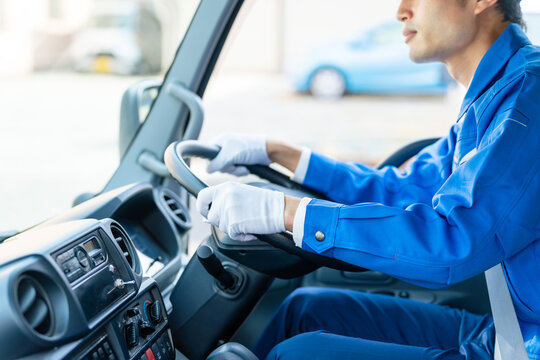
I am Takeo Takasaki. I have been a truck driver for 30 years; I support this blue ticket system. Because reckless bicycle behavior does not only affect the safety of cyclist but also my professional career as a truck driver. Trucks need more time to stop and have large blind spots than normal cars, so it is difficult to avoid reckless bikers such as the one who ignores traffic lights. However, when accidents happen between bikes and cars, even if reckless bikes cause accidents, the responsibility of drivers is higher. Then, everyone on the road should follow the traffic rules. I believe this blue ticket system contributes to reducing the number of dangerous bicycles. Dangerous behavior pays the price. It is natural to being punished when bike violate traffic law.
References :
Global Cycling Safety. (2026, January 27). Japan introduces blue ticket system for bicycle traffic violations, effective April 1, 2026. https://global-cycling-safety.org/en/2026/01/japan-bicycle-blue-ticket-system-2026-april/
Global Cycling Safety. (2026, January 31). Bicycle “blue ticket” system to be introduced in April 2026; NPA urges renewed compliance with traffic rules. https://global-cycling-safety.org/en/2026/01/japan-bicycle-blue-ticket-system-2026/
Perspective 3: Pedestrian

I am Akiko Takauji, 82 years old. I got injured by bicycle which violated traffic laws. I was glad that Japanese government finally implemented stricter laws for cyclists. Many people think bicycles are not serious as cars, but this is wrong. Reckless cycling cause serious injuries and consequences like I have experienced. Violating traffic rules of cyclists such as ignoring traffic lights, going on the wrong side of road, and watching smartphone while cycling make everyone dangerous. As a victim of bicycle accident, I strongly encourage this enforcement. Law should protect weak people.
References :
Global Cycling Safety. (2026, January 31). Bicycle "blue ticket" system to be introduced in April 2026; NPA urges renewed compliance with traffic rules. https://global-cycling-safety.org/en/2026/01/japan-bicycle-blue-ticket-system-2026/
Global Cycling Safety. (2026, March 27). "Blue ticket" system for bicycle traffic violations to begin April 2026: Fines introduced for riders 16 and older. https://global-cycling-safety.org/en/2026/03/japan-bicycle-blue-ticket-system-april-2026/
Inoue, Y. (2026, May 14). Cyclists issued "blue tickets" in over 2,000 cases since April 1 rollout. The Japan Times. https://www.japantimes.co.jp/news/2026/05/14/japan/crime-legal/bicycle-violation-numbers/
Perspective 4: Delivery Rider

I am Kenta , a 27-year-old delivery rider, and I use my bicycle every day to deliver food and packages. I understand the importance of following traffic rules because I spend many hours riding on busy streets. However, I believe the new blue ticket system creates additional pressure for delivery riders like me. In many areas, there are not enough bicycle lanes, so we often have to choose between riding on narrow roads with heavy traffic or using the sidewalk carefully. Both options can be stressful and dangerous. I agree that reckless behaviors, such as using a smartphone while riding or ignoring traffic signals, should be punished. However, the government should first provide safer cycling infrastructure before introducing stricter penalties. Building more bicycle lanes and improving road design would help delivery riders work more safely while protecting pedestrians and drivers. I believe safety should come from better roads as well as fair enforcement.
References :
Institute for Social Vision Design. (2026, March 17). Japan’s bicycle “blue ticket”—The contradiction of enforcement without infrastructure. https://isvd.or.jp/en/columns/2026-03-17-bicycle-blue-ticket-regulation
Institute for Social Vision Design. (2026, March 29). The structural problem of Japan’s bicycle blue ticket system—Can penalty enforcement be justified when only 0.6% of cycling routes are dedicated lanes? https://isvd.or.jp/en/columns/bicycle-blue-ticket-infrastructure-gap-2026
(Ken and Hoshito)
___________________________
Good surce and bad source:
The National Police Agency website(https://www.npa.go.jp/?utm_) is a good source because it is the official government agency responsible for enforcing bicycle traffic laws. The information is accurate because it is based on official statistics and legal documents. It provides reliable information about bicycle blue tickets and traffic safety policies.
A cycling group's website(https://www.worldcyclingalliance.org/?utm_) can help us understand cyclists' concerns. However, it may not be completely fair because it supports cyclists' interests. We should also check information from neutral sources, such as government reports or academic studies.
(References)
National Police Agency. (n.d.). National Police Agency. https://www.npa.go.jp/
World Cycling Alliance. (n.d.). World Cycling Alliance. https://www.worldcyclingalliance.org/
(Ken)
_________________________________________
Finding Key Ideas through Word Clouds
For this activity, I created two word clouds using texts from websites with different viewpoints on Japan's bicycle blue ticket system. The first word cloud was based on the National Police Agency (NPA) website, which explains and supports the introduction of the blue ticket system. The second word cloud was based on an article published by the Institute for Social Vision Design (ISVD), which argues that the policy was introduced before Japan developed adequate cycling infrastructure.

The first word cloud contains large words such as traffic, bicycle, blue, ticket, violation, notification, police, enforcement, payment, and criminal. These words reflect the NPA's purpose of explaining the legal procedures and penalties for traffic violations. The article emphasizes that cyclists must obey traffic laws to prevent accidents and improve road safety. Rather than discussing cyclists' opinions, the NPA focuses on enforcing the law and encouraging compliance with traffic regulations.
https://www.npa.go.jp/bureau/traffic/bicycle/portal/system.html/control.html?utm_

https://isvd.or.jp/en/columns/bicycle-blue-ticket-infrastructure-gap-2026?utm_
Comparing the two word clouds, I noticed that both sources aim to improve bicycle safety, but they emphasize different solutions. The NPA believes that stronger enforcement and legal penalties will reduce dangerous cycling, while the ISVD argues that infrastructure investment and better cycling environments are more important. This comparison helped me understand that the debate is not simply about whether blue tickets are necessary, but also about how Japan should balance enforcement with improvements to cycling infrastructure.
(References)
National Police Agency. (n.d.). The blue ticket system for bicycle traffic violations. https://www.npa.go.jp/bureau/traffic/bicycle/portal/system.html/control.html
Yokota, N. (2026, March 29). The structural problem of Japan's bicycle blue ticket system: Can penalty enforcement be justified when only 0.6% of cycling routes are dedicated lanes? Institute for Social Vision Design. https://isvd.or.jp/en/columns/bicycle-blue-ticket-infrastructure-gap-2026
(Ken)
_____________________________________
Using the COCA Corpus
I searched the word violation in the Corpus of Contemporary American English (COCA) to examine the words that frequently collocate with it. The most common noun collocates included law, rule, code, traffic, policy, and act. Common verb collocates included commit, investigate, charge, and cite.
These collocations show that the word violation is mainly used in legal and regulatory contexts. It is closely connected with laws, traffic regulations, and official procedures rather than everyday conversations. This is similar to the language used on the National Police Agency (NPA) website, which explains the bicycle blue ticket system by emphasizing traffic violations, law enforcement, and legal responsibility.
One collocation that caught my attention was traffic violation, because it is directly related to my research topic. This suggests that the word violation is commonly associated with road safety and traffic laws. The COCA results helped me understand that the blue ticket system is presented primarily as a legal measure to improve compliance with traffic rules. However, after comparing these results with the ISVD article, I also realized that legal enforcement is only one part of the discussion. Many people argue that improving cycling infrastructure and education is equally important for creating a safer cycling environment.
(Ken)
_________________________________________
Why You Can't Trust This Website
HotAIR - Feline Reactions to Bearded Men

I don't think this website is trustworthy because it includes many jokes and unrealistic details. For example, it says that the laboratory assistants were anesthetized while holding the cats. It also says that fifteen cats gave birth while looking at the photos. These things are impossible or meant to be funny.
Another reason is that many of the authors and references are not real scientists. Some of the names, such as Dr. Seuss, Madonna, Arnold Schwarzenegger, and Sinead O'Connor, are famous entertainers, not researchers. The article also cites unusual journals that aren't likely to be legitimate scientific publications. This makes the article look more like a joke than a real research paper.
Also, the study doesn't contain enough reliable evidence to support its conclusions. It doesn't explain important details such as controls, statistical analysis, or how the conclusions were validated. In addition, many of the claims are exaggerated.
Overall, I wouldn't trust this website because it's clearly written as satire, and not as a real scientific study. It also lacks credibility, and uses fictional or unreliable references.
(Reference)
Maloney, C., Lichtblau, S. J., Karpook, N., Chou, C., & Arena-DeRosa, A. (n.d.). Feline reactions to bearded men. Annals of Improbable Research. https://improbable.com/airchives/classical/cat/cat.html
(Ken)
__________________________________________________________________________
Survey Results Summary (6 participants)
Our survey showed mixed opinions about Japan’s bicycle blue ticket system.
- Support for blue tickets: Four out of six participants (67%) supported giving bicycle riders traffic tickets, while one opposed the idea and one was unsure.

- Strictness of the law: Opinions were divided. Some believed bicycle laws should become stricter to improve safety, while others felt the current rules are sufficient or worried that cyclists could be unfairly targeted.
- Road safety: Participants were also divided on whether blue tickets would make roads safer. Some believed they would improve safety if enforced fairly, while others thought education and better bicycle infrastructure would be more effective.
- Fairness of fines: Most respondents (67%) thought the fines were fair, while 33% disagreed.

- Traffic violations: All participants admitted that they had broken a bicycle traffic rule at least once. The most commonly mentioned violations were ignoring traffic lights, riding without lights at night, using a phone while cycling, and riding on the wrong side of the road.

- Behavior change: Five out of six respondents (83%) said that the possibility of receiving a blue ticket would definitely or probably change the way they ride, suggesting that the system could encourage safer behavior.

- Awareness: Only half of the participants had heard of bicycle blue tickets before taking the survey. However, most felt they were somewhat informed about bicycle traffic laws.

- Additional comments: Several respondents felt that some rules or fines were too strict or impractical, while others argued that some fines are actually too low to discourage dangerous behavior. A common opinion was that public education about bicycle rules is still necessary, since many people are not fully aware of the regulations.
Overall, the survey suggests that while participants have different opinions about the fairness and effectiveness of blue tickets, most believe that the possibility of receiving a ticket would influence cyclists' behavior. At the same time, many respondents emphasized that education and public awareness should accompany enforcement to improve bicycle safety.
(Ken)
_________________________________________
Introducing Our NGO: Don't Feel Blue

Don't Feel Blue is a non-governmental organization (NGO) dedicated to improving bicycle safety in Japan. The idea for this NGO was developed through our research on the controversial issue of bicycle blue tickets. Throughout our research, we examined different perspectives, including those of cyclists, pedestrians, and drivers, and found that opinions on blue tickets vary widely. While many people support stricter enforcement, others believe that education and better cycling infrastructure are equally important.
Based on these findings, we created Don't Feel Blue to promote a balanced approach to bicycle safety. Our mission is to reduce bicycle accidents through education, responsible cycling, and improvements to cycling infrastructure. Rather than focusing only on punishment, we aim to address the root causes of unsafe cycling behavior and encourage cooperation among cyclists, pedestrians, drivers, schools, local governments, and communities.
To achieve our goals, we organize bicycle safety workshops, community events, awareness campaigns, and charity rides. We also advocate for safer cycling environments and work with local partners to improve road safety. Our NGO is supported through donations, sponsorships, fundraising events, and volunteer participation.
We recruit new members through university events, social media platforms, and community activities. In addition, we attract public attention by sharing educational content online and organizing events that encourage people to become involved in bicycle safety initiatives.
Don't Feel Blue is more than just an organization. It is a community where people can make a real difference. By joining our NGO, members can help create safer roads, develop valuable leadership and teamwork skills, and turn their ideas into meaningful action. Together, we believe we can build a safer future for everyone.
(Ken)
_______________________
Reflection of our presentation

Overall, I think our presentation was successful because we clearly explained both our research findings and the purpose of our NGO. Instead of only introducing our organization, we showed how our research on bicycle blue tickets led us to create a practical solution. I also think our slides were well organized, which made it easy for the audience to follow our ideas.
However, I think there were some areas that could have been improved. We could have spoken more naturally, and we needed smoother transitions between speakers. In addition, practicing together more would have helped us present with better time management.
Besides the areas we identified ourselves, my teacher and classmates also suggested several ways to improve our NGO. One suggestion was to offer more rewards or incentives to encourage people to follow bicycle traffic rules. They also recommended that we pay more attention to e-bikes, as they are becoming increasingly common and raise new safety concerns. In addition, they suggested creating more opportunities for adults to learn bicycle traffic rules, since safety education should not be limited to children.
(Ken)
__________________

